

 More Share Options
Yeh Na Poocho Kidhar Ja Rahi Hun Aaj Main...
calendar_month08 Sep, 2023 visibility



Incorporating gratitude into our daily where we write down three things we are grateful for each day.
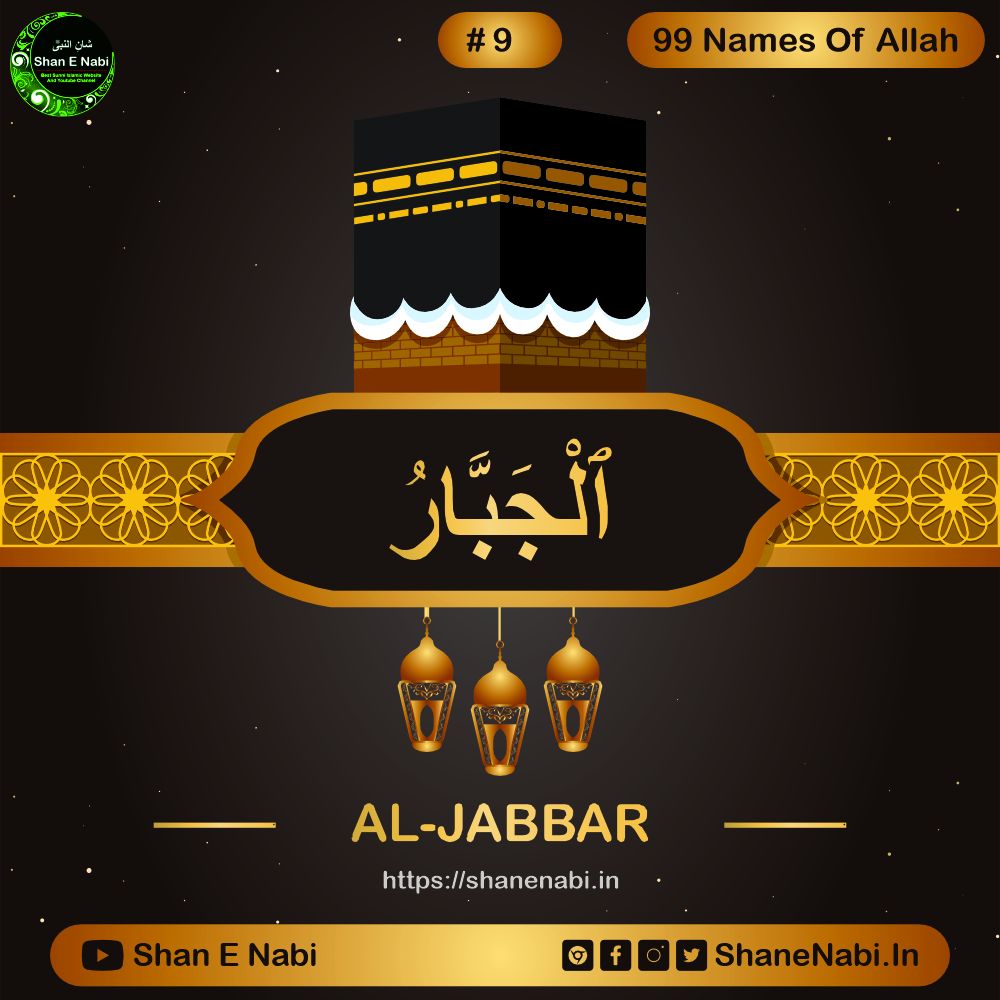
Follow authorٱلْجَبَّارُ
(جبار) (जब्बार)
Hinglish: Zabardast, Tamam taqaton ka malik
English: The Compeller, The Restorer (The All Compelling), The Supreme Power, The Possessor of Having All Power
اردو: (زبردست) اعلیٰ طاقت، تمام طاقتوں کا مالک
हिन्दी: जबरदस्त (बहाल करनेवाला), सर्वोच्च शक्ति, सभी शक्ति रखने वाले
Allah is Al-Jabbar (in arabic: ٱلْجَبَّارُ), There are several accepted meanings to this name. The most often quoted is The Compeller. He implements His decree without any opposition. There is no one that prevails over Him. The other interpretation is the repairer. He restores all of creation. He heals the broken-hearted, binds their wounds, and brings comfort to the weak. He compels each and everything to His divine will but is never Himself compelled.
Arabic Root:
From the root jim-ba-ra (ج ب ر), which has the following classical Arabic connotations: to restore something to sound, right or good state to bring back to normal, reform to benefit, to confer a benefit to be supreme, high, above all of creation to be compelling, irresistible.
As a name of Allah سُبْحَٰنَهُۥ وَتَعَٰلَىٰ Al-Jabbar is only mentioned once in the Qur'an.
Huwal-laahul-lazee laaa Ilaaha illaa Huwal-Malikul Quddoosus-Salaamul Muminul Muhaiminul-aAzeezul Jabbaarul-Mutakabbir; Subhaanal laahi Ammaa yushrikoon
English Translation:
"He is Allah, other than whom there is no deity, the Sovereign, the Pure, the Perfection, the Bestower of Faith, the Overseer, the Exalted in Might, the Compeller, the Superior. Exalted is Allah above whatever they associate with Him."— (Qur'an 59:23)
Verses that describe Allah (سُبْحَٰنَهُۥ وَتَعَٰلَىٰ) decree:
There are other verses that we can examine which helps us understand what it means to be Al-Jabbar. For example, in Surah Insan verse 30, "And you do not will except that Allah wills. Indeed, Allah is ever Knowing and Wise." Allah is the one who compels us. We don't get to choose where we're born, who our parents are, our physical traits, or the quirks that make us uniquely us. We don't fully understand the intricacies of our anatomy, the beating of the heart, the firing of our nerves, and the conception of a new baby. All these details of perfection which we're unaware of are because Allah سُبْحَٰنَهُۥ وَتَعَٰلَىٰ has compelled it to be that way. In Surah Yaseen, "His command is only when He intends a thing that He says to it, 'Be,' and it is." (Qur'an 36:82)
A second meaning:
There is a second meaning to Al-Jabbar: the one who restores, resets, or fixes our brokenness. He fixes by force and changes the state of something that is disordered and sets it right. Therefore, we can make du'a with this name when you want something in your life restored or fixed. Just as he compels a thing, He can put our lives in order. He is the only one who can mend what is broken, and restore what is lost.
Reflection:
When we come to know Al-Jabbar, we realize Allah سُبْحَٰنَهُۥ وَتَعَٰلَىٰ as having extreme power, supremacy, strength over all His creation. Imam Al-Ghazali says, "praised and exalted - for He compels each thing and nothing compels Him, and He has no competitor on either score." In coming to realize this, we are subdued. We can no longer believe in our superiority. We understand that He is the one who elevated our rank. He benefits His creation but needs no benefitting Himself. This name can be a reminder not to inflate your ego and to avoid self-aggrandizement, "Thus does Allah seal over every heart [belonging to] an arrogant tyrant." (Qur'an 40:35)
Supplications from Hadith:
We should call upon this name for help in desperation. A cry to Al-Jabbar to remedy a broken heart, marriage, or confidence. In a weak hadith narration, "Ibn Abbas narrated: 'Between the two prostrations, the Prophet would say: (Allahummaghfir li, warhamni, wajburni, wahdini, warzuqni). 'O Allah! Pardon me, have mercy on me, help me, guide me, and grant me sustenance.' Here wajaburni means to help or rectify me - which aligns with the meaning of Al-Jabbar being the restorer/repairer. Although this narration is da'if (weak), the supplication is still very much relevant. A word of caution, repeating this in your prostration would be ritualizing something unsound, and it's not the way to reach definitive practices taught by rasulullah. If you do so because, at the moment, your heart desires to supplicate in prostration, and you recite this particular du'a because it comes to your mind, then that's fine. It's still a beneficial act that praises Allah سُبْحَٰنَهُۥ وَتَعَٰلَىٰ. The words of dhikr are still applicable, but ritually doing something off of a weak hadith is generally not advisable.
In another narration from Hudhaifah: He prayed with the Messenger of Allah (ﷺ) one night, and he heard him say when he said the Takbir: "Allahu Akbara dhal-jabaruti wal-malakuti wal-kibriya'i wal-'azamah (Allah is Most Great, the One Who has all power, sovereignty, magnificence and might)." When bowing, he would say: "Subhana Rabbiyal-'Azim (Glory be to my Lord Almighty)." When he raised his head from bowing, he would say: "Lirabbil-hamd, Lirabbil-hamd (To my Lord be praise, to my Lord be praise)." And when he prostrated (he said): "Subhana Rabbiyal-A'la (Glory be to my Lord Most High)." And between the two prostrations (he said): "Rabbighfirli, Rabbighfirli (Lord forgive me, Lord forgive me)." His standing, his bowing, when he raised his head from bowing, his prostration, and the time between the two prostrations were almost the same.
References:
01) Da'if (weak) Jami` at-Tirmidhi 284
02) Sahih (Darussalam) Sunan an-Nasa'i 1069